Category:

Commercial Vehicle Maintenance

Heavy-Duty Truck Collision Repair in Massachusetts 

When a commercial truck or fleet vehicle is involved in an accident, every hour of downtime matters. Whether you manage delivery trucks, construction haulers, or tractor trailers, getting back on the road quickly and safely depends on choosing the right collision repair partner. 

In Eastern Massachusetts, where routes like I-93, I-95, and Route 24 keep the region moving, heavy-duty truck repair demands a level of precision and scale that most body shops can’t deliver. 
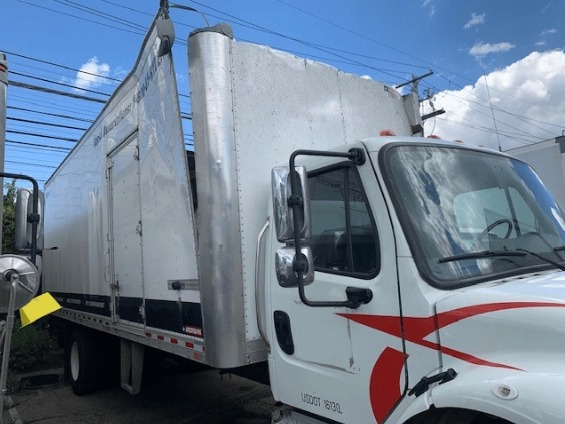
white box truck with a missing roof and damaged side in need of collision repair

Why Heavy-Duty Truck Repair Requires Specialized Equipment 

Truck collision repair goes far beyond surface fixes. A bent frame, damaged suspension, or compromised weld can turn into a serious safety hazard if not handled correctly. 

Key differences between truck and passenger vehicle repairs: 

  • Frame straightening systems – Heavy-duty trucks require full-length frame machines that can handle vehicles exceeding 40 feet and tens of thousands of pounds. 
  • High-capacity paint booths – Oversized vehicles can’t fit in standard spray booths. Facilities need full downdraft systems designed for large vehicles. 
  • Specialized materials and coatings – Commercial paints and finishes resist corrosion and environmental exposure far better than consumer-grade coatings. 

Common Types of Heavy-Duty Truck Damage We Repair 

Understanding the types of damage your fleet may experience can help you plan for repairs and avoid extended downtime. Our Randolph facility regularly addresses: 

  • Collision damage – From minor fender dents to major front-end impacts on box trucks and tractor trailers. 
  • Frame and chassis damage – Bent or twisted frames from accidents or heavy loads, requiring precision straightening equipment. 
  • Suspension and axle issues  – Misalignment, broken leaf springs, or damaged air ride systems that affect drivability and safety. 
  • Body and panel damage – Dents, scratches, and metal fatigue on cargo boxes, cabs, and sleeper units. 
  • Paint and finish restoration – Matching factory-grade coatings to ensure durability and professional appearance. 
  • Trailer and attachment repair – Repairing lift gates, dump beds, and other components for commercial use. 

How to Choose a Truck Collision Repair Shop in Eastern Massachusetts 

When evaluating your options, focus on the following: 

  • Facility capabilities: Can they handle vehicles your size? 
  • Turnaround time: Do they prioritize commercial fleets? 
  • Location: Proximity to major trucking routes like Route 24, I-93, and Route 3 can reduce transport costs. 
  • Reputation: Check for established experience with municipal, construction, and freight fleets. 

If you’re based near Randolph, Quincy, Brockton, or the South Shore, choose a shop with proven experience in heavy-duty and fleet work, not just standard auto repair. 

Where to Find Truck Collision Repair in Eastern Massachusetts 

Truck operators in Randolph, Quincy, Brockton, Weymouth, Milton, and along I-93 benefit from having one of the region’s few large-scale commercial vehicle collision centers nearby. Facilities like these are equipped with: 

  • Full-length frame straightening systems 
  • Large downdraft paint booths 
  • Heavy-duty lifts and alignment racks 
  • Certified technicians experienced in commercial and municipal fleets 

When every mile and minute matters, partnering with a specialized commercial collision center ensures your trucks get back on the road, safely and quickly

Benefits of Choosing a Local Commercial Collision Center 

Opting for a collision center local to your fleet has several advantages: 

  • Faster turnaround: Reduced travel time for trucks and parts helps vehicles get back on the road sooner. 
  • Personalized service: Local centers understand regional traffic patterns, regulations, and fleet needs. 
  • Reliable communication: Proximity allows for direct, in-person updates and inspections. 
  • Emergency support: Local centers can offer same-day towing or mobile repair services when time is critical. 
  • Community trust: Working with a reputable local business often results in better accountability and long-term partnerships. 

By choosing a collision center near Randolph or Boston, fleet managers reduce downtime, minimize transportation logistics, and ensure quality repairs handled by experts familiar with heavy-duty commercial vehicles. 

FAQ 

Q: What types of heavy-duty trucks do you repair? 

A: We handle all makes and models of heavy-duty trucks, including Peterbilt, Freightliner, Kenworth, International, Mack, and Volvo. Our Middletown and Randolph facilities also service box trucks, dump trucks, and fleet vehicles across New England. 

Q: How long does a truck collision repair take? 

A: Minor repairs or cosmetic work can be completed within a few days. Structural, frame, or component replacements typically can take weeks or longer depending on parts availability. 

Q: Can a frame on a semi or box truck be straightened? 

A: Yes, provided the repair shop has a frame straightening system rated for heavy-duty vehicles and technicians trained in structural restoration. Our Randolph and Middletown locations have one. 

Q: What’s the difference between a body shop and a collision center? 

A: A general body shop handles cosmetic repairs. A collision center, especially one equipped for trucks, manages both structural and mechanical restoration, ensuring full roadworthiness. 

Q: How can I reduce downtime after an accident? 

A: Choose a facility that offers towing, estimates, and parts ordering under one roof, so repairs start immediately after insurance approval. 
By 0 Comments

School Bus Collision Repair in Massachusetts 

When a school bus is involved in an accident, every minute counts. A transportation director in Weymouth or Quincy knows that a downed vehicle can throw off an entire route schedule, especially when the approximately 400,000 Massachusetts students who ride the school bus annually rely on timely, safe service every morning. Across Eastern Massachusetts, from Brockton to Lowell, these incidents remind us how critical it is to have a trusted, certified collision repair partner on call. 

At DeVivo Collision Centers in Randolph, MA, we see firsthand how proactive repair planning can save school districts time, money, and stress. 

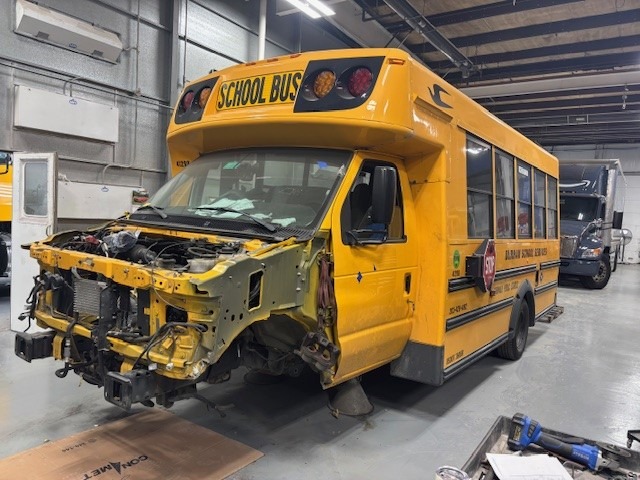
yellow school bus in a collision shop with missing front and tires in need of collision repair

Understanding Massachusetts School Bus Repair Requirements 

School buses are held to the highest safety standards in Massachusetts. Under 540 CMR 21.00, buses must pass semiannual RMV inspections and comply with strict guidelines for lights, mirrors, stop arms, emergency exits, and wheelchair lifts. 

School buses carry precious cargo and that changes everything. Certified facilities like ours in Randolph, MA, are equipped for: 

  • Frame straightening 
  • Body panel replacement and paint matching 
  • Electrical and safety system testing 
  • Wheelchair lift calibration 

After any significant repair, buses must pass a Massachusetts RMV inspection before returning to service. This includes verifying that all safety and accessibility features function properly. 

By choosing a shop that’s certified and familiar with Massachusetts regulations, districts across the South Shore and Eastern Massachusetts ensure compliance and reduce risk. 

What to Look for in a School Bus Body Shop 

Not every collision center can handle school buses. The best repair partners offer specialized knowledge, certified technicians, and facilities built for larger vehicles. 

Here’s what to look for: 

  • Certifications: Credentials ensure technicians meet national safety and repair standards. 
  • Manufacturer familiarity: Shops experienced with brands like IC Bus, Collins, and Blue Bird understand the nuances of each body design. 
  • Specialized facilities: Oversized bays, dedicated prep stations, and large overdraft spray booths allow full-size buses to be refinished in controlled environments. 
  • Accessibility expertise: For wheelchair-accessible buses, ensure the shop performs proper lift calibration. 
  • Fleet support: Districts across Boston’s South Shore benefit from multi-bus repair scheduling and direct billing. 

Choosing a shop familiar with Eastern Massachusetts districts, from Lynn to New Bedford, ensures repairs are done right and on time. 

Common Types of School Bus Damage We Repair

School buses operate long hours in busy neighborhoods, tight school yards, and unpredictable New England weather, so certain types of damage occur more frequently than others. At our Randolph, MA facility, we regularly see and repair:

Front and rear impact damage

Low-speed collisions, parking lot incidents, and stop-and-go traffic throughout the South Shore often lead to bumper, hood, or rear cap repairs.

Side panel dents and scrapes

Narrow streets in communities like Quincy, Milton, and Brockton can cause body panel damage from curbs, traffic posts, and other vehicles.

Roof or upper-body damage

Branches, tree-lined roadways, and low overhangs can create damage that requires panel replacement or refinish work.

Stop arm, mirror, and light assembly damage

Safety components are regularly impacted by tight turns, winter driving, and yard maneuvers, making proper alignment and testing essential.

Addressing these repairs quickly ensures buses remain compliant and helps districts avoid service interruptions during peak transportation hours.

The South Shore Advantage 

Many districts assume that bigger Boston shops mean faster service, but the opposite is often true. Heavy traffic, limited space, and longer scheduling queues can slow turnaround significantly. 

Located in Randolph, MA, DeVivo Collision Centers offers convenient access for fleets from Quincy, Weymouth, Milton, Braintree, Brockton, and surrounding South Shore towns. Our large repair bays, paint booth capacity, and in-house frame equipment make us one of the few facilities in the state equipped to handle school buses efficiently. 

Districts choose Randolph not only for our technical capabilities, but also our accessibility. Close enough for same day drop offs and inspections, yet outside the congestion of Boston. The result: quicker turnaround, easier logistics, and minimal downtime. 

Best Practices for School Districts 

You can’t always prevent accidents, but you can plan for them. Districts across Eastern Massachusetts should develop proactive fleet repair protocols to minimize fleet disruptions. 

  1. Pre-approve your repair vendors before an incident occurs. 
  2. Verify certifications
  3. Maintain communication with your repair partner throughout the process. 
  4. Schedule non-emergency work (paint refreshes, minor dents) during summer downtime. 

These simple steps ensure that when the unexpected happens, your district’s buses are repaired quickly and safely by a trusted local partner. 

Get Back on the Road Safely 

Whether your district operates a handful of buses or a full regional fleet, working with a certified school bus repair partner matters. Our team at DeVivo Collision Centers in Randolph, MA provides complete body, paint, and frame repair services for school buses across the South Shore and Eastern Massachusetts. 

Contact us today for an estimate. 

FAQ 

Q: How long does a school bus repair usually take? 

A: Time may vary on all types of work. However, minor bodywork or cosmetic repairs may take a few days. Major structural, frame, or accessibility system repairs may take weeks or more depending on parts availability. Schools near our Randolph facility (Quincy, Brockton, Milton, and the rest of the South Shore) may benefit from faster turnaround times. 

Q: Do you repair wheelchair lifts and ADA accessibility equipment? 

A: Yes. We fully service, calibrate, and test wheelchair lifts and other accessibility systems to ensure compliance with ADA standards for all Massachusetts school buses. 

Q: Will my school bus pass state RMV inspections after repairs? 

A: Absolutely. Every school bus repaired at our facilities is inspected and certified to meet Massachusetts RMV safety standards before returning to service. 

Q: Do you work with insurance for collision repairs? 

A: Yes. We can coordinate with insurers to handle claims efficiently, ensuring accurate repair estimates and minimizing administrative work for school districts. 

Q: What types of damage can your collision repair shop handle on school buses? 

A: We repair all types of damage, including body dents, scratches, frame straightening, collision repairs, paint restoration, and cosmetic touch-ups. Our locations are equipped to handle small and large buses, including IC Bus, Thomas Built, Collins, and Bluebird. 

By 0 Comments

Why Repairing Commercial Vehicles Is Different: 6 Key Reasons

In theory, collision repair is collision repair. Vehicles may need body work, frame repair, or just paint and other cosmetic fixes. But in reality, there are major differences between repairing commercial vehicles and repairing personal cars and trucks.

In this article, we go over a few of the biggest differences between commercial and personal collision repair. Those differences and others are a good reason to take your work vehicles to a commercial collision specialist like DeVivo Collision instead of a general repair center.

6 Ways Fleet Collision Repair Is Different from Personal Auto Repair

Getting a personal car back into shape after a collision is a huge challenge that requires experience and skill to do properly. But doing the same for a business’ work vehicles is a whole different ball game. 

In this section, we go into detail about some of the key differences between commercial and personal collision repair.

1. Time is Money With Commercial Vehicles

Being without your personal car while it’s being repaired is a major hassle, but one you can usually work around. Not having access to your company’s work vehicle can have a serious financial impact on your business.

At DeVivo, we understand how important your fleet is to your business. That’s why we make efficiency a focal point of our business. Our goal is to get your vehicle repaired properly as quickly as possible to keep interruptions to your business functions and revenue to a minimum.

2. Work Vehicles are the Face of a Company

Delivery vans, service trucks, and other vehicles are often a critical part of a company’s infrastructure. But they’re also one of the most visible representations of a company’s brand. As a result, a business’ vehicles are often the first impression that business makes with potential customers. That means it’s important that they look their best whenever they’re out and about.

We are perfectionists when it comes to restoring the look of commercial vehicles when they come to our shop for repairs. You’ll always get your fleet back looking good as new — or perhaps even better.

3. Commercial Vehicle Insurance is More Complex Than Personal Auto

Dealing with insurance companies is never simple, even with personal policies. However, business insurance policies that cover work vehicles can often have a whole new set of hoops to jump through. For those without experience dealing with business insurance, working through the claims process can be a nightmare.

Our experience in commercial collision repair includes experience dealing with insurers and their policies. We know how to deal with claims agents and adjusters to ensure a speedy settlement so you can get your vehicle back as soon as possible and use the coverage you pay for. 

4. Work Vehicles Have Different Space and Equipment Needs

Businesses often employ large vans or trucks for work purposes. These vehicles are typically much larger than the standard passenger vehicles that general collision centers deal with. They also tend to have heavier-duty components.

This means that collision repair for these vehicles requires larger spaces and different equipment to properly repair them. As commercial vehicle specialists, we designed our workspaces with these vehicles in mind. Our repair center has large bays that allow us to paint full-size work vehicles and frame straightening equipment and other machinery built to handle the more intensive needs of large commercial vans and trucks. That enables us to do all the repair work for fleet vehicles right here in house.

5. Commercial Vehicles Use Different Materials

Work vehicles must be able to withstand thousands of miles of heavy usage in a variety of environments. As such, they are typically built and finished with more robust materials than passenger vehicles. Body panels tend to be heavier. Paint is usually more resilient.

Generalist collision centers that mostly serve passenger vehicles may have to special order the proper materials to fix your work vehicle. Or, they may need to outsource that work to another provider. In some cases, they may complete repairs using materials meant for passenger vehicles, putting the form and function of your work vehicle at risk.

At DeVivo, our focus on commercial vehicles means we know what materials we need to have on hand to fix those vehicles properly. That means you won’t have to wait around while we source the right thing. We’ll never cut corners by using substandard parts, paints, and other materials for repairs, either. You can rest assured that your business’ vehicles will be restored back to OEM condition or better.

6. The Stakes Are Higher with Commercial Vehicles

When it comes to collision repair, there is simply more room for error with passenger vehicles. A bumper that doesn’t fit exactly right, a paint that varies slightly from the original color, or a few days’ delay on finishing the job can be frustrating and disruptive. But there is far more at stake when it comes to repairing commercial vehicles.

Doing collision repairs poorly or taking too long to do them on work vehicles comes at a real cost for the businesses that own them. Even an extra day without your delivery van could produce a financial hit that some businesses may not be able to easily absorb. Poor workmanship could make your work vehicles look shoddy and unkempt, which isn’t good for your brand. 

As a small business ourselves, we understand just how critical your work vehicles are to your ability to stay in business and thrive. Your success is always top of mind for us, driving us to provide high-quality work in an efficient manner without breaking the bank.

DeVivo Collision: Commercial Vehicle Collision Repair Specialists

It’s not that you can’t get your work vehicles repaired at a general collision center. You can. It’s that, as with anything else, a specialist has the knowledge, skills, and experience to do it better. Repairing commercial vehicles is simply different than repairing passenger vehicles. 

When you need repairs to your business’ vehicles done right and done efficiently, you need a specialist. At DeVivo Collision, getting your work vehicles back into pristine shape is our specialty. In fact, it’s the only thing we do here. 

Collision Blog 522
By 0 Comments