Why Summer Is the Best Time for School Bus Collision & Body Repairs
Summer creates a short but important window for school districts and transportation providers to prepare buses for the upcoming school year.
While buses are temporarily out of daily service, fleet managers have the opportunity to address collision damage, paint deterioration, alignment issues, and other body work concerns before fall inspections and route startup begin.
Waiting until late summer often creates unnecessary scheduling pressure and longer turnaround times as fleets rush to prepare vehicles before students return.
For many transportation departments, summer is the only realistic opportunity to complete larger repairs without disrupting routes, creating substitute vehicle shortages, or affecting day-to-day operations.
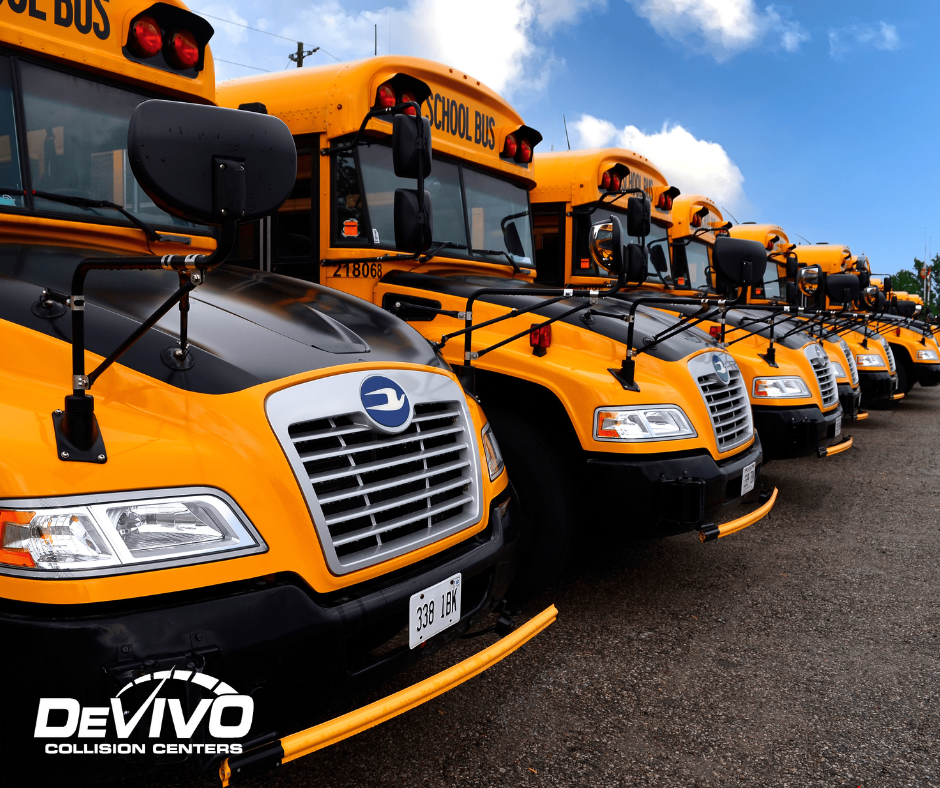
Why Summer Is the Best Time for School Bus Repairs
School buses experience significant wear throughout the winter and spring months.
Road salt, moisture, curb impacts, minor accidents, and constant daily operation all contribute to:
- Body damage
- Corrosion
- Paint deterioration
- Alignment problems
- Suspension wear
- Structural concerns
During the school year, fleets often delay non-emergency repairs because buses are needed for active routes.
Summer downtime gives transportation departments the flexibility to complete repairs properly before buses return to service.
Common School Bus Damage Found After Winter
One of the biggest issues fleets face after winter is corrosion.
Road salt and moisture can quickly affect body panels, wheel wells, undercarriages, and structural components. If left untreated through the summer, corrosion can worsen significantly before the next school year begins.
Other common repair issues include:
- Side panel and body damage
- Mirror and exterior component damage
- Paint chipping and fading
- Wheel alignment problems from potholes and curb strikes
- Frame and structural concerns
- Door and latch issues
- Front-end collision damage
Addressing these issues early helps reduce long-term repair costs and minimizes the risk of buses being removed from service unexpectedly during the school year.
Why Waiting Until August Creates Problems
Many fleets wait too long to schedule repairs.
As August approaches, repair schedules become significantly tighter as transportation departments rush to prepare buses before inspections and route startup begin.
Waiting until the last minute can lead to:
- Limited scheduling availability
- Longer turnaround times
- Delays before inspections
- Operational disruptions
- Increased fleet downtime
Scheduling repairs earlier in the summer helps transportation providers avoid late-season bottlenecks and better prepare for the school year.
School Bus Repairs Require Commercial Fleet Experience
School buses are not passenger vehicles.
Repairing large commercial vehicles requires specialized equipment, repair procedures, facility space, and technician experience.
DeVivo Collision works with school districts, municipalities, private schools, and transportation providers throughout Connecticut, Massachusetts, Rhode Island, and surrounding areas to provide:
- School bus collision repair
- Commercial body work
- Paint and refinishing
- Frame repair
- Wheel alignment
- Insurance claim assistance
- Fleet scheduling support
Commercial fleet experience matters when preparing buses for safe operation and inspection readiness.
Prepare Your Fleet Before Fall Inspections
Summer repair schedules move quickly.
If your fleet has buses needing body work, collision repair, paint refinishing, or alignment service, now is the ideal time to schedule inspections and reserve repair time before the fall rush begins.
Preparing buses now helps transportation departments minimize downtime, avoid scheduling delays, and ensure vehicles are ready before students return.
Need to prepare your fleet before fall?
Request an inspection or quote today to reserve summer repair time before schedules fill.